
When you move to Puerto Rico from the mainland United States it can feel like you are still in the United States. You do not need a passport to get there. You pay in USD. You can also speak English. The same laws apply.
The process of buying a home in Puerto Rico is different though. In this guide, you’ll get to know the main differences.
How the Process Differs from a Mainland Transaction
Surely, Puerto Rico is a part of the US, but real estate laws are quite different there. They come from a long time ago, when it was a Spanish territory.
In Puerto Rico people do not use a contract when they want to buy a house in Puerto Rico. The person selling the house in Puerto Rico usually gives the buyer of the house some paperwork. However it is up to the buyer of the house to get a lawyer to look at the paperwork before the buyer signs the paperwork. Most of the time the paperwork is like an option to buy the house in Puerto Rico not a purchase agreement for the house.
The way people find houses for sale in Puerto Rico is also different. Many real estate agents in Puerto Rico do not list their houses, so you have to look all over the internet to find them. You have to check a lot of websites, like Clasificados Online, Zillow and the websites of real estate companies that use Stellar MLS, which’s the system that the Puerto Rico Association of Realtors uses to list houses.
Financing: What US Programs Apply
Buyers in Puerto Rico can get help from US-backed mortgage programs. There are types of loans that people can apply for like FHA, VA, USDA and conventional loans.
The amount of money you need to pay upfront is different for each type of loan. For example VA and USDA loans do not require any money down which is really helpful. FHA loans require 3.5% down and conventional loans in Puerto Rico usually require at least 5% down.
If you want to buy a house in Puerto Rico you need to get pre-approved for a loan before you start looking. This is a rule. If you are paying cash for a house you need to show that you have money and you need to provide documents to prove it.
The Legal Closing Process
WARNING:
Closing in Puerto Rico works differently than on the mainland. Buyers who skip independent legal review or assume standard US closing procedures apply often face delays, disputed terms, or unresolved liens. Read this section carefully before signing anything.
In Puerto Rico a notary is actually a lawyer who has a license. This notary does not just sign documents they also prepare the deed. Make sure they are fair to both the buyer and the seller. When people buy or sell property in Puerto Rico they usually do not use a title company. People can buy title insurance, but it is not something that everyone gets.
There are a couple of things to keep in mind when planning to buy a property in Puerto Rico. When the buyer and seller agree on a price they both have to be in person to sign the papers. If the buyer is married their husband or wife has to be too.
It is a nice idea to get a CRIM certification, which shows that the property owner has paid all their taxes. You can get this document from the CRIM office. The CRIM office can put a lien on a property if the owner owes taxes and that lien has to be paid before the property can be sold.
When someone buys a property in Puerto Rico they usually have to pay some costs like fees for the notary and for registering the property. These costs are usually around 1.15% to 2.5% of the price of the property. The buyer also usually has to pay a deposit, which’s, like a down payment, when they agree to buy the property. This deposit is usually 5% to 10% of the price of the property.
| Cost Item | Typical Range |
|---|---|
| Buyer closing fees | 1.15%–2.5% of purchase price |
| Down payment (conventional) | 5%–20% |
| Down payment (FHA) | 3.5% |
| Effective property tax rate | ~0.39% of assessed value |
| Buyer deposit after agreement | 5%–10% |
Puerto Rico property taxes are collected by the CRIM. The value of a property for tax purposes is usually 40 to 50 percent of what you paid for it. Then they take that value. Charge you about 0.39% of it in taxes. You can find this information on thepuertoricorealestate.com. This means that people who own property in Puerto Rico do not have to pay much in taxes as people in most other US states. If you live in your property all the time you can ask the CRIM for a discount of $15,000 on the value of your property, for tax purposes.
Shipping Your Belongings: The Logistics Reality
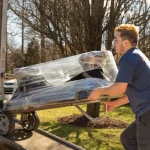
Moving to Puerto Rico is considered a move within the country. But it is way different from the moving to another state. Your things will travel by boat, which means it will take longer. You will need to do more paperwork and get special insurance.
A Plus Moving services will help you make your move smooth. Our team will take care of moving your belongings and free your mind for more important details of the move. Call us today at (800) 919-6332!
What to Expect Door to Door
- Book a carrier with Puerto Rico ocean experience. Most of the time things get sent from Jacksonville, Florida which is also known as JAXPORT. It takes around three to six days to get from Jacksonville to San Juan by boat. In total it usually takes 7 to 14 business days to get everything from your place to your new place, including packing, getting things through the port and delivering them to your new home.
- Prepare a detailed household inventory. Even though you do not have to pay customs duties when you move from the mainland to Puerto Rico your things might still get checked at the port. You might have to pay a special tax on new things. If you are moving used things that you already own, you probably will not have to pay this tax. Your shipping company should help you make a list of your things that’s okay with the rules.
- Verify your moving insurance covers ocean transit. The normal insurance for moving your things does not automatically cover things when they are being sent by boat. You should check with your shipping company to make sure you are covered before they load your things.
- Coordinate delivery timing with your closing date. You should try to have at least two weeks extra time just in case. If your things arrive before you can get into your place you will have to pay to store them and it will be a hassle.
- Confirm last-mile access at the destination. Some places, like cities and areas, with steep hills have narrow roads and it can be hard for big trucks to get there. If you want to avoid issues with that, verify with your moving company if it’s alright and they can get to your place.
Common Risks Worth Knowing
The biggest mistake people make when buying a house is skipping the legal review. This is a problem because if the buyer does not have their own lawyer they have very little protection if there are problems with the terms of the sale.
When you are buying a house in Puerto Rico you need to make sure the home inspection covers everything. This includes the condition of the roof, which’s often flat in Puerto Rico and the cisterns and water systems. You also need to check the panels and the generators to make sure they work well together. After a storm you need to make sure the house is still strong.
The tax incentives from Act 60 are real. You have to really live in Puerto Rico to get them. To qualify you have to spend at least 183 days per year in Puerto Rico, register to vote there, get a Puerto Rico drivers license and show that you do not have strong ties to the mainland anymore. You should work with a certified accountant who knows the laws in both Puerto Rico and the mainland before you make any decisions based on the tax savings you expect.
Summary
To buy a house in Puerto Rico you should start by finding a lawyer. Then, get a pre-approved for a loan. Plan how you will get your things to the island. You should do all of these things before the date you want to close the sale. If you do these three things you can avoid most of the problems that people have when buying a house in Puerto Rico.