Broken dishes are one of the common outcomes of a poorly packed box. You see, plates and bowls and glasses are really fragile. They can shift around a lot during transit.. If you use the right materials and do things in a methodical way you can prevent most breakage.
What You Will Need Before You Start
You should gather all your supplies first. If you run out of packing paper while you’re in the middle of packing a box you will have to make some rushed decisions and that can lead to broken items.
- You will need packing paper, because the ink from newsprint can transfer onto your dishes
- You will need bubble wrap for your stemware and thin-rimmed pieces
- You will need medium-sized boxes and it is best, if they are dish packs because these have double-thick walls
- You will need packing tape
- You will need a marker so you can label your boxes
Dish pack boxes are usually around 18x18x28 inches. They are made specifically for kitchenware. You can use boxes but they do not offer as much structural support.
A Plus Moving services will help you make your move smooth. Our team will take care of moving your belongings and free your mind for more important details of the move. Call us today at (800) 919-6332!
How to Wrap Plates Step by Step
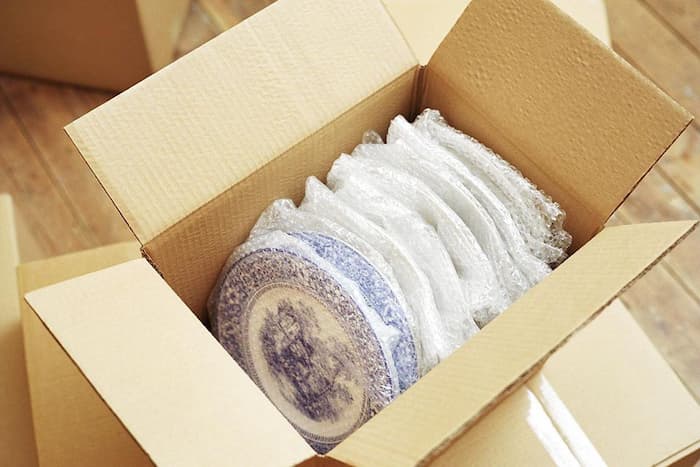
Plates usually break along the rim, not the center. If you wrap them individually and pack them vertically that will reduce the risk of breakage. Experienced movers say that plates that are packed on their edges do not get damaged as much as plates that are packed flat. This is because when you pack them vertically the impact forces are distributed evenly.
- You should lay two sheets of packing paper flat on a table.
- Then you should place the plate at one corner of the paper.
- You should fold the corner of the paper over the plate, then roll it tucking the sides of the paper in as you go.
- You should use tape to secure the wrap.
- You should stack two or three wrapped plates together. Wrap the bundle again.
- You should place the bundles vertically in the box, not flat.
Wrapping Glasses and Mugs
Glasses need a lot of attention because of their stems and handles. You should start by stuffing some paper inside each glass. This will prevent the walls of the glass from collapsing when something presses against it.
You should wrap the glass from the base rolling the paper diagonally toward the rim. When packing wine glasses, you should add a layer of bubble wrap around the stem. When you wrap mugs you should make sure the handle is well-padded because the handle is the vulnerable part.
You should not pack glasses with the mouth down. You should pack them upright or on their sides. You should make sure they are fully wrapped.
Filling and Closing the Box
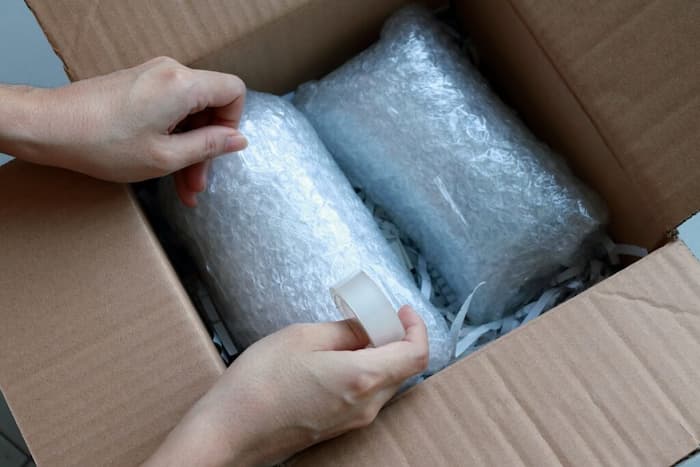
You should shake the box gently before you seal it. If you hear anything shifting around you should add some paper. A packed box should feel solid, it should not be rattling.
You should mark every dish box “FRAGILE” and “THIS SIDE UP”, on at least two sides. If boxes are stacked incorrectly during a truck load, that is one of the reasons why kitchen items get damaged.
A Common Mistake
Overpacking is something you should avoid. If a dish pack box is too heavy, it can be difficult to handle and boxes that are too heavy are more likely to be dropped or stacked poorly during a move. You should keep your dish boxes manageable; they should not weigh more than 40-50 pounds.